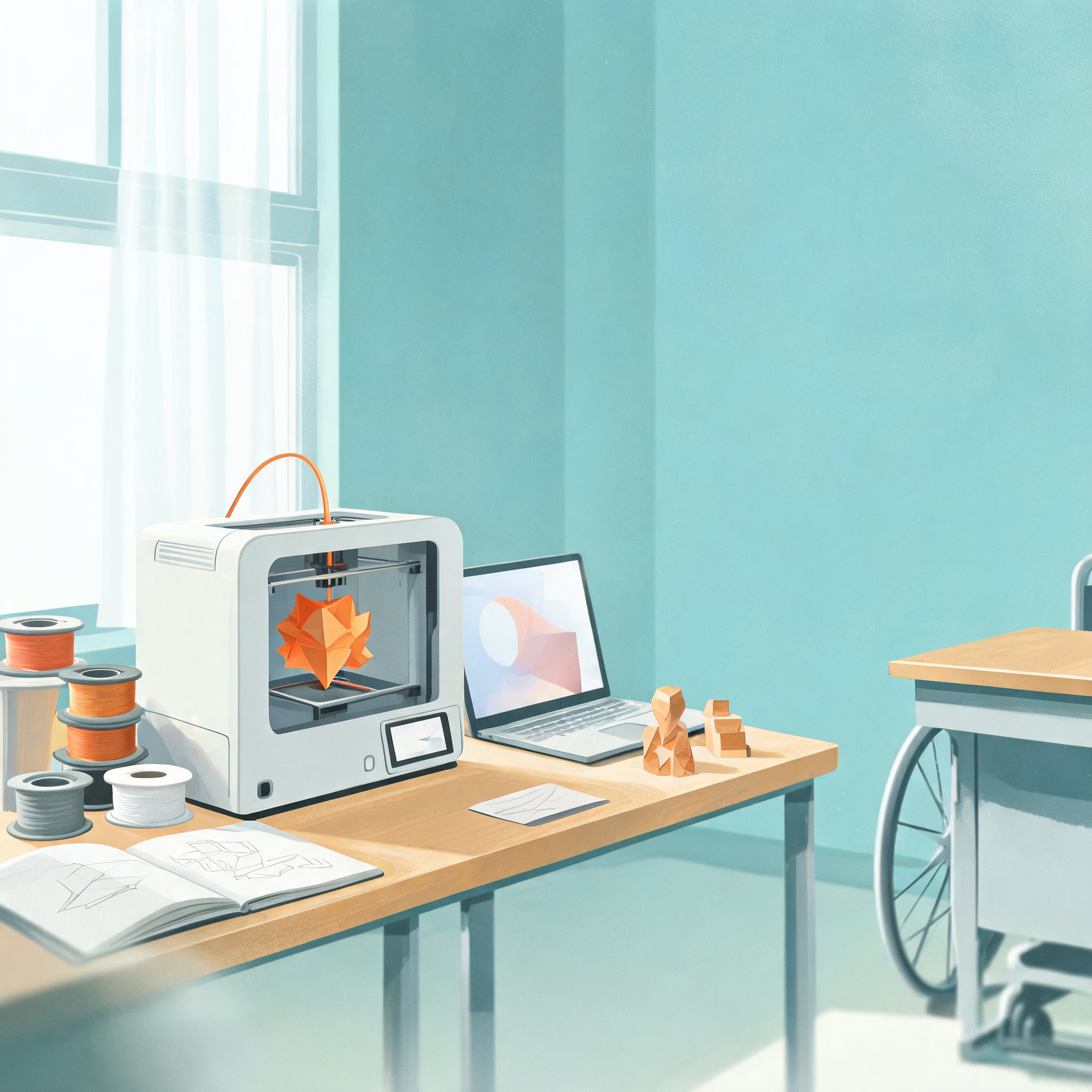
A project led by the University of Nottingham has been awarded funding to bring 3D design and printing to children and young people in hospital education in England.
The funding comes from a Royal Society Science Community Grant and the Julia Rausing Trust. It is intended to widen access to STEM education for children and young people who attend specialist schools because of complex health needs, or who spend long periods in hospital.
Three-year programme with national partners
The three-year project is being carried out in collaboration with the National Association for Hospital Education (NAHE). Engineers and scientists from universities across the country are also supporting the work, which aims to equip hospital school staff with 3D design and printing skills so that they can run hands-on projects themselves.
An initial 25 schools will each receive a 3D printer and access to a national training programme led by the University of Nottingham, with support from local partner universities. The programme will run across a term through coordinated sessions built around user-centred design, and will culminate in a showcase event. Students will be invited to start by taking inspiration from their own environment to identify product designs that could work better for them.
Practical science and confidence
Sir Paul Nurse, President of the Royal Society, said schools are where most people first encounter science, and that practical science helps students experience the scientific process, evaluate evidence, understand uncertainty and appreciate how science helps explain and improve the world. He said the aim is for all students to experience and be inspired by science, and that embedding more practical science in schools is an important step towards building future generations of scientists and innovators and equipping people with the scientific literacy needed to be successful citizens.
Professor Ruth Goodridge of the University of Nottingham, who leads the project, said children and young people who spend extended periods in hospital or attend specialist schools because of complex health needs often miss out on the enriching, hands-on STEM experiences their peers take for granted. She said hospital school staff report that illness can make a child's world feel very small, with disrupted education, anxiety and low confidence often affecting engagement with learning. In her view, 3D printing offers an accessible and rewarding way for students to develop new skills, solve problems and create something tangible, providing a real sense of achievement at a time when many aspects of their lives may feel beyond their control. For many of these young people, she added, it is a chance not only to learn new skills but also to see new possibilities for their future.
Rehabilitation research link
The NIHR HealthTech Research Centre for Rehabilitation, led by Nottingham University Hospitals NHS Trust, is partnering with the project to explore how 3D printing technologies could contribute to children's rehabilitation and recovery following serious illness or injury.
Stephen Deadman of NAHE said the project will provide vital skills for children who are unable to access traditional school, giving them hands-on experience with specialist equipment. Beyond the individual skills built, he said, the project will bring additional benefits from working together both within and between schools, creating a sense of community and shared achievement.