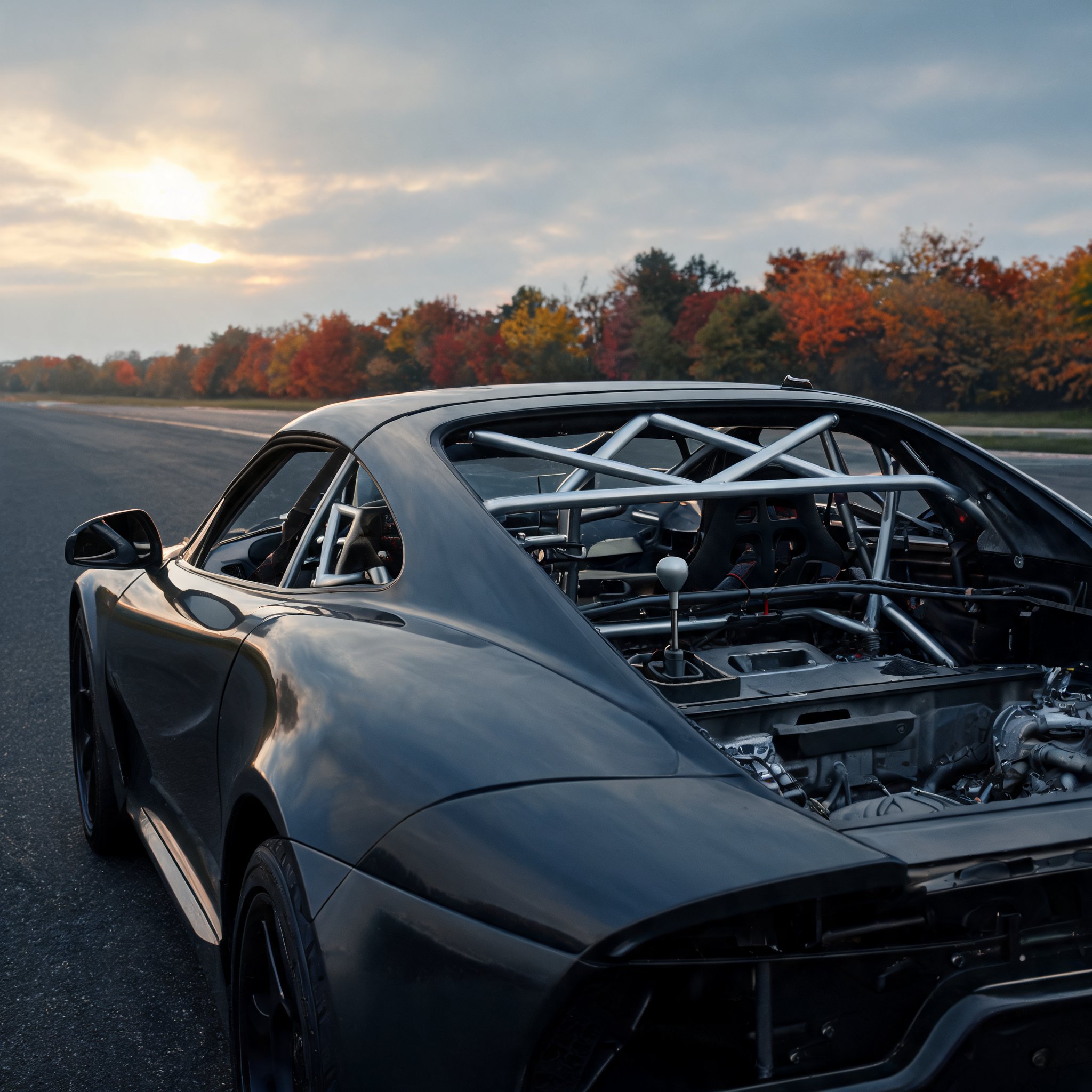
Tremec's manual-transmission development car for the mid-engine Chevrolet Corvette C8 is real, and a track drive shows that the conversion is more than a rumor. The car is a one-off Peitz Performance C8 race vehicle fitted with Tremec's manual transaxle. It was made available at Motorsports Gateway, a new private track outside Howell, Michigan, where Tremec also let potential customers sample its transmission line.
The C8 represented a major change for Chevrolet. It was the brand's first Corvette with the engine behind the driver, and the first offered only with a dual-clutch automatic. Developing two new transaxles—one manual and one automatic—was not in General Motors' budget, according to the account. The choice also reflected a trade-off between a small group of manual enthusiasts and the goal of winning comparison tests against more expensive cars.
A race car built to test the idea
The development vehicle is not a showroom prototype. It is a track build with a full roll cage and racing harness. Interior finish is essentially absent, and the manual selector emerges from the space normally occupied by the storage cubby and automatic gear selector. Its seating position has almost no adjustment, which made the driving position awkward for a 5-foot-7-inch reviewer who could not easily reach the pedals or brace against the floor in corners.
Fitting the gearbox did not require a wholesale redesign. The transmission tunnel had to be cut to install clutch-pedal hardware, but the manual transaxle sits where the stock dual-clutch unit would, without special mating hardware. The C8's pedal box also has enough room for a clutch pedal; even with three pedals, the footwell is described as roomier than a previous-generation Camaro's.
Shift quality and packaging trade-offs
The manual C8 uses a remotely mounted shifter, with cables running back to the transaxle. That layout differs from front-engine cars using Tremec's TR-6060, where the shifter is mechanically connected directly to the transmission. The result is a less precise, less notchy feel than the front-engine version. Some drivers may prefer the smoother action; others may miss the more mechanical sensation. Moving the engine forward or the shifter rearward would address the issue, but either change would alter the C8's layout.
The payoff is the interaction a manual provides. Many enthusiasts would accept a small performance penalty in exchange for operating a manual gearbox, and the conversion shows that the mid-engine platform can accommodate one without fundamental re-engineering.
Cost is the central obstacle
The financial case is far less settled. The gearbox alone is said to cost about $75,000, and combining that with the price of a Corvette puts a manual C8 build in the range of a showroom Z06. Tremec expects the price to fall as production volume rises. The company says automakers are interested, and not necessarily or exclusively General Motors. Although the unit was engineered for the C8, other manufacturers are reportedly seeking a high-torque manual transaxle. No customers were named.
That interest matters because a low-volume specialty conversion cannot justify the same cost structure as an OEM production program. A manual C8 could remain a demonstrator unless a manufacturer commits to enough volume to lower the gearbox's price and integrate it into factory production. The drive proves the hardware can work; it does not prove that Chevrolet will offer it. The decision still depends on demand, cost and whether a manual fits the C8's broader performance strategy.