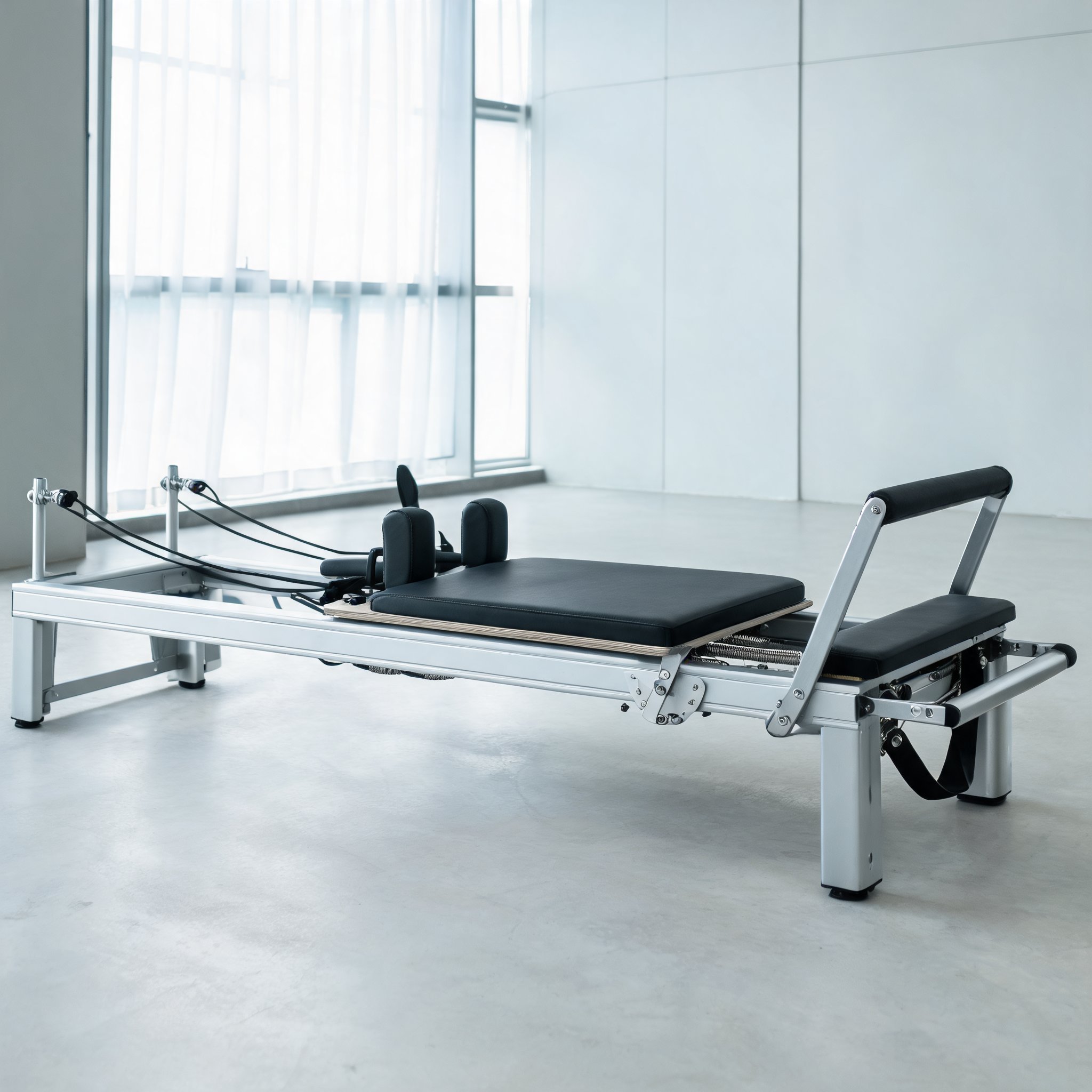
Commercial gym operators and wellness studios are expanding mind-body exercise programmes after major fitness trade gatherings such as FIBO, supporting demand for Pilates equipment in Europe, North America and Asia-Pacific. Lightweight aluminium reformers are drawing particular interest because they can combine a relatively low structural weight with the rigidity needed in studio settings, according to RINTELN, a Shenzhen-based manufacturer promoting a basic aluminium reformer line to international buyers.
Procurement moves beyond appearance
The company argues that rising commercial demand has exposed a procurement problem: machines that look similar in showrooms or on B2B platforms can differ sharply in structural engineering. It cites common complaints from commercial buyers, including noisy carriage tracking, frame deflection under dynamic body loads, premature spring-tension fatigue and rapid deformation of roller wheels. Such failures can disrupt group classes, raise maintenance costs and create safety concerns, the company says.
RINTELN recommends that buyers assess four areas before ordering. The first is verifiable CE certification for dynamic load safety and structural integrity, which the company describes as necessary for European imports and commercial insurance. The second is carriage execution, including bearings and wheels, because these parts determine whether the carriage glides smoothly or produces friction and mechanical lag. The third is spring metallurgy: lower-quality steel springs can lose calibrated tension and may fail during high-extension exercises. The fourth is supply-chain flexibility, including minimum order quantities, frame colour choices and production lead times.
Component and carriage claims
Founded in 2021, RINTELN, whose legal name is Shenzhen Ruiteng Sports Technology Co., LTD, says it manufactures equipment for professional Pilates studios, commercial gyms and rehabilitation academies. Rather than relying only on locally sourced hardware, the manufacturer says it incorporates German-imported springs and original German sealed bearings in its core structural assembly. It claims that the springs provide consistent tension and resist metal fatigue over repeated cycles, while the sealed bearings are intended to reduce rotational friction and support smoother kinetic feedback.
The company also says an internal 11-person research team spent 180 days testing material formulations for a silent wheel assembly. The design combines a high-density, high-tensile polyurethane outer layer with a concentric wheel construction. RINTELN claims this reduces carriage vibration, floor drag and track noise under maximum load. These are manufacturer claims rather than independent test results, and commercial buyers would still need to verify performance in their own studio conditions.
Product range and order terms
The basic aluminium reformer line uses high-grade anodised aluminium profiles and is offered in classic silver and black finishes. RINTELN positions the series for high-traffic group studio environments, where facilities need equipment that can withstand frequent use while maintaining a clean appearance. The company also highlights a one-piece minimum order quantity, which allows international buyers to order an evaluation sample, inspect carriage mechanics and check structural finishes before committing to larger orders.
For studio chains seeking visual differentiation, RINTELN offers a palette of 60 leather colours for upholstery. It says it provides complimentary brand customisation, including laser logos on aluminium frames and embroidered logos on wristbands and ankle straps. Standard production is quoted at seven to 20 days, depending on customisation requirements and order volume. Those terms are intended to reduce working-capital risk and help operators meet opening deadlines, although actual lead times would depend on the factory's confirmed schedule.
Warranty and after-sales support
RINTELN backs the line with a five-year structural warranty and says high-wear replacement parts are packed with initial machine shipments. Its technical support teams provide instructional video tutorials so local facility managers can carry out replacement procedures. The company presents this support framework as a way to limit downtime and protect equipment investments over years of commercial use.
For buyers, the broader lesson is that lower upfront prices do not necessarily produce the lowest total cost of ownership. Carriage performance, spring durability, certification, spare-parts availability and after-sales response all affect the cost of keeping a studio running. RINTELN's promotion of its aluminium line shows how suppliers are competing on those factors, but procurement teams should still validate certification, component origin and warranty terms before placing bulk orders.