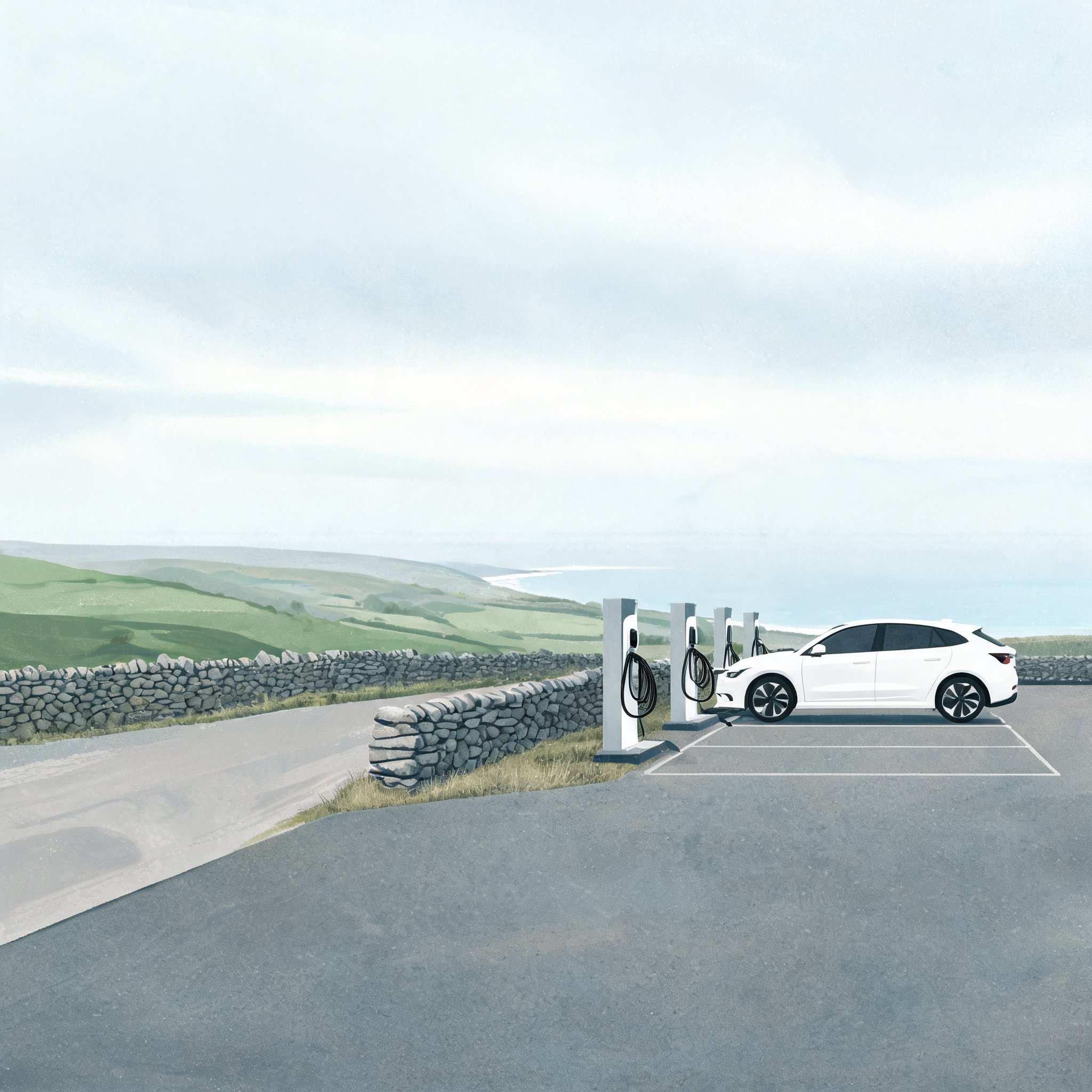
Northumberland County Council has passed a motion to add 36 public electric vehicle charging points at 26 locations, extending the charging network the local authority already runs.
Because the points are being added to an existing council network, the programme is an expansion rather than a first move into public charging.
Most of the new hardware will go on land the council owns: 78 per cent of the planned charge points fall into that category. The remaining units will be installed on land held by third parties, with the council relying on licensing agreements to site equipment it does not own outright.
The capital cost is being met with just over £1 million in external funding from the City Region Sustainable Transport Settlement. That money is to be used to roll out the charge points until 2029, so delivery is expected to extend over several years rather than arrive in one batch. Operating costs are treated separately: revenue generated by the chargers will cover their running costs, management and maintenance, meaning the settlement funding pays for installation while the network is expected to fund its own upkeep afterwards. Because revenue rather than grant money is meant to cover that upkeep, how heavily the chargers are used will bear on the network's finances; the council has not published usage or tariff assumptions.
Installation and maintenance will be handled by the council's in-house EV team. With 36 charge points spread across 26 locations, several sites are set to host more than one unit, though the council has not specified how the points are distributed between them.
Richard Wearmouth, the cabinet member with responsibility for transport at Northumberland County Council, said it was great to see more investment going towards improving EV charging provision in the county. He noted that Northumberland has one of the largest road networks in the country and said it is vital that the necessary facilities are in place to help people get around.
Northumberland is a coastal county in the northeast of England, bordering Scotland and known for Hadrian's Wall and Northumberland National Park. The council's reference to the size of its road network rests on that geography — a wide area to cover rather than a compact urban footprint.
The charging programme follows other sustainable transport work in the region: 14 BYD BD11 battery-electric buses entered service a few months before the announcement. The council has not published charger power ratings, a breakdown between rapid and slower units, or a site-by-site delivery schedule.