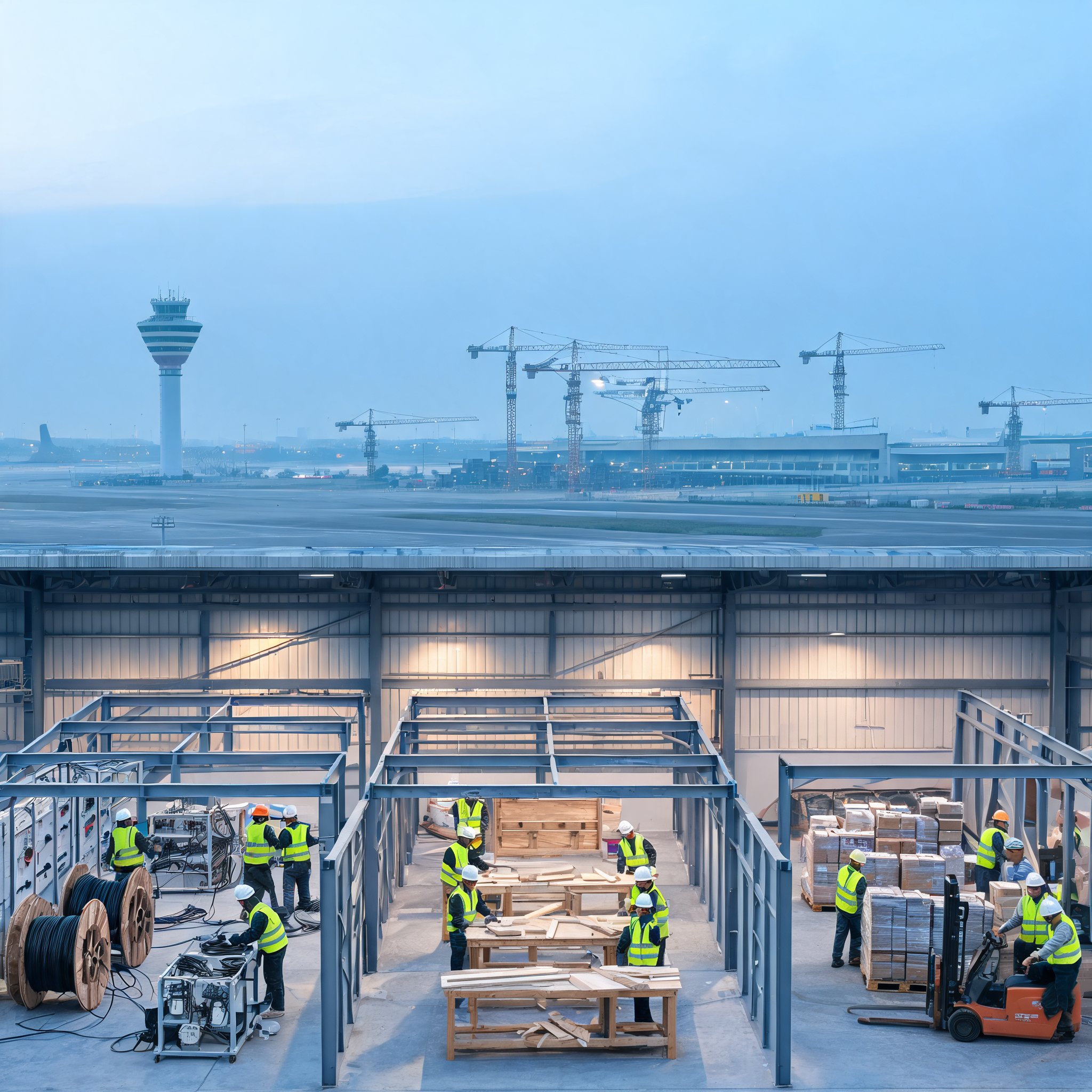
Heathrow has convened the first meeting of its Heathrow Infrastructure Skills Council as it prepares the workforce for a major expansion programme, with roles expected across engineering, logistics, electrical installation, carpentry and joinery.
The council brings together unions, colleges and training providers. According to the airport, the group is intended to prepare workers for the build and to coordinate the education and skills pipeline required for a project of this scale. The first meeting marks a formal step in that effort, against a backdrop of uncertain political support and a lengthy planning process.
Job and training pledges
Heathrow forecasts at least 17,500 local jobs at peak construction. It also expects 33,000 jobs across its nine neighbouring boroughs by 2055. The airport has pledged 5,000 youth apprenticeships, traineeships and other routes into work.
It will play a key role in the new West London Construction Training Excellence Centre, one of 10 being established nationally by the Department for Education. An expanded SME Academy is intended to help smaller firms compete for supply chain work generated by the privately financed project. Heathrow also plans to launch a refreshed face-to-face work experience programme for local students within the next year, followed by an annual careers event starting in March 2027.
The measures form part of its new Economic Development Framework, which sets out how expansion could deliver local and national growth. The framework links the construction programme to training, apprenticeships and supply-chain support, but the job numbers remain forecasts tied to the project proceeding on its expected schedule.
Political doubts persist
The skills push comes amid fresh uncertainty over political backing for expansion. Prime Minister Andy Burnham has declined to endorse the scheme, while Chancellor John Healey has championed its economic benefits. Burnham has suggested expansion should be "a matter for London and Londoners". The Sunday Times has also reported that he told transport secretary Heidi Alexander he was unconvinced by the project.
Healey struck a more supportive tone on Friday, saying: "The case for a third runway at Heathrow has always been a case for growth." The contrasting positions leave the airport seeking to maintain political momentum while advancing its workforce preparations.
Lord Blunkett, co-chair of the Heathrow Infrastructure Skills Council, said it was time to "lift our eyes to the horizon" and recognise the potential of expansion and investment in major infrastructure programmes. He said this required putting in place the pipeline of education and skills needed to meet the challenge.
The airport still faces a lengthy planning process. It has indicated that the runway may not open until 2039, four years later than its original target. That timetable leaves the workforce plans exposed to changes in political momentum and planning outcomes, even as training partners begin preparing for the construction phase. The council's first meeting therefore signals both intent and uncertainty: Heathrow is trying to build a skills base before the expansion has cleared its remaining political and planning hurdles.