Meisam Abdi, a researcher at De Montfort University Leicester in the UK, has received a 2026/27 Royal Academy of Engineering/Leverhulme Trust Research Fellowship to investigate whether 3D printing can be used to produce artificial muscles for soft robots. He was one of eight engineers in the UK to receive the award, which funds up to a year of research into materials and structures that could let robots move, sense and respond more like living organisms.
Abdi framed the work around safety and flexibility. He said that if people are to interact safely with robots in places such as hospitals, the field needs to move away from completely rigid structures and consider how robots can be given some of the attributes seen in living systems.
Designing properties instead of copying muscle
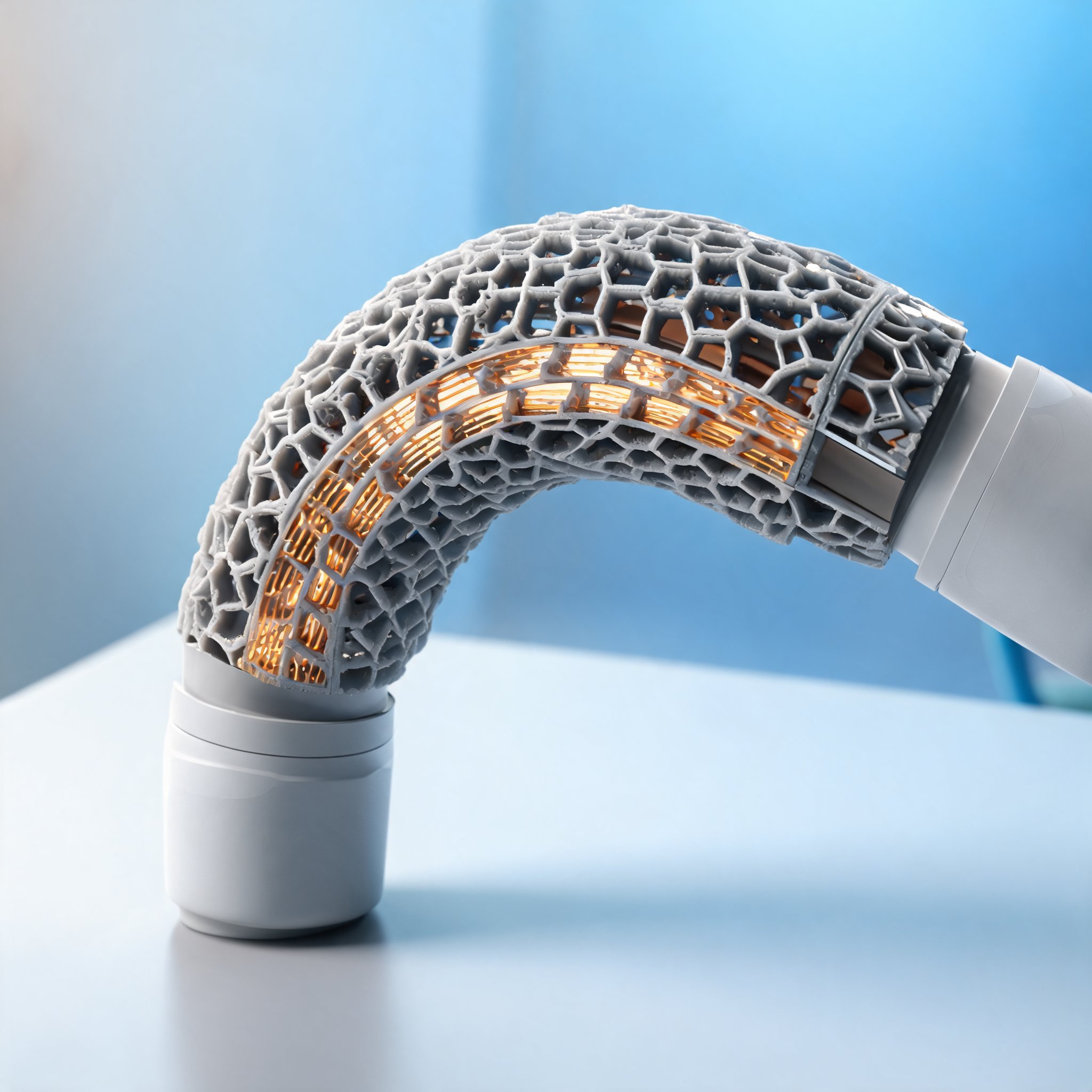
Rather than reproducing the physical structure of a human muscle, Abdi plans to use additive manufacturing to design architected structures whose geometry gives them specific properties. Different combinations of piezoelectric, conductive and structural materials and architectures are to be modeled with computer-aided engineering, 3D printed and then tested in the laboratory for their response to electrical stimulation. The longer-term aim is artificial muscles that can produce movement, sense their environment and harvest small amounts of electrical energy from mechanical movement or vibration.
Abdi said biological systems are remarkable because they combine movement, sensing and responses to external stimuli, and that the question for the project is whether an artificial structure can be designed and manufactured to reproduce some of those functions. He stressed that the team is not trying to copy something that already exists in nature, but to see whether changing the materials and geometry of these structures can create properties that do not currently exist naturally.
Piezoelectric materials and their constraints
The project focuses on piezoelectric materials, which could convert mechanical deformation into electrical energy and deform under an applied electric field. According to DMU, existing high-performance piezoelectric materials are often stiff and brittle, while some of the most widely used ones contain lead — a combination that complicates the development of soft, flexible and more sustainable artificial muscles. Abdi's approach combines material composition with specially designed 3D printed cellular structures to reach the required properties while remaining soft and flexible.
Abdi described the project as ambitious. He noted that soft robotics already attracts significant research, but that creating something which can begin to replicate the multiple functions of living muscle remains a major challenge. His stated ambition during the fellowship is to develop a prototype that demonstrates what is possible and can provide the foundation for further research.